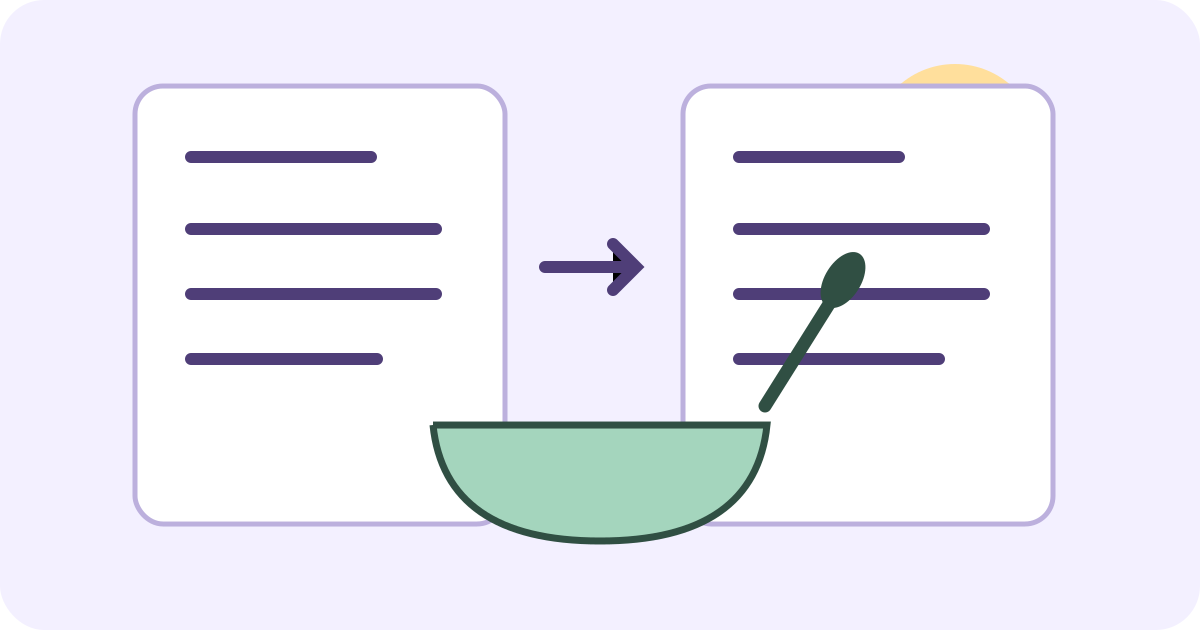
To translate a recipe, keep the original, translate its ingredient list and instructions, then compare the two line by line. Check which ingredient each amount belongs to, every fraction and unit, and the order of the steps. Keep language translation separate from changing servings, converting units or substituting ingredients. The JotMe text demo below can draft a pasted passage; you review and save the usable wording yourself.
Start with the complete recipe, not an isolated ingredient
- Save the source page, photograph or permitted personal copy, including its title, serving count, ingredient groups, method and notes. Keep attribution with your working copy.
- Check that the source itself is readable. Expand a collapsed ingredient list or method before copying; a photograph needs a separate text-recognition step.
- Paste a short, complete section with its heading and nearby context. Include the ingredient amount and its preparation note together. Do not send private family details or material you are not allowed to share. For a longer recipe, keep each ingredient group beside its corresponding method steps where practical. Preserve headings and step numbers, then check the assembled translation for references such as remaining, divided and reserved. Splitting does not increase the shared allowance.
A menu describes a dish; a recipe tells you how ingredients are used. A translated ingredient name alone cannot recover a missing method, serving count, temperature or preparation note. If the source is incomplete, find the missing source information rather than asking the translator to fill the gap.
Use the text demo for a checked passage
The embedded tool starts with Spanish as the source and English as the target for the example below. Change both selectors if your actual recipe uses another supported language pair. This is a text field, not a recipe-URL importer, photo uploader, cooking timer or saved recipe book.
- Keep the original and a place to save your checked translation open outside the demo.
- Choose the source language and target language before pasting. Paste a short passage with its heading, amounts and units.
- Pause after typing. The existing tool starts translation after about one second; there is no separate Translate button. Input edits and language changes can start another request.
- Read the translated passage beside the source. An explanation may help you investigate wording, but it does not verify the recipe or establish that a number is correct.
- Select and copy the visible result if your browser permits it, or transfer a short checked passage manually. Inspect the pasted copy. The demo has no dedicated copy-all, download or output correction editor.
Check the remaining text allowance before starting. The current initial lifetime allowance is 5,000 estimated tokens across requests, and input, translated output and explanation all count. Prior use can leave less. The separate 50,000-character API ceiling is not an allowance for a recipe of that length. Splitting a passage, editing it or changing languages does not reset the balance.
Save source and checked wording elsewhere before another edit or request. A limit can clear the input and result. Creating an account does not promise that the pasted recipe or this draft will move into a saved collection. If you need more text translated, follow the current account and plan instructions, then enter the saved source again as needed.
Try a short passage you can compare
The following is a fictional language example written for this guide, not a complete recipe, tested cooking instructions or an observed JotMe result. Use it to practice checking the meaning. Its English reference was written by the author; your actual demo output may differ.
- Spanish source: Para dos raciones: 200 g de tomates, cortados en dados; 1/2 cucharadita de sal. Reserva la mitad de los tomates. Añade los demás al bol; no añadas todavía los tomates reservados. Después, añade los tomates reservados al bol.
- English reference: For two servings: 200 g tomatoes, diced; 1/2 teaspoon salt. Reserve half the tomatoes. Add the rest to the bowl; do not add the reserved tomatoes yet. Later, add the reserved tomatoes to the bowl.
Try it yourself
0 / 5,000 used · 5,000 left
Translation will appear here
Explanation
An explanation of translation choices appears here when your translation is ready.
Compare the source phrases with the reference
- Source: “Para dos raciones.” English reference: “For two servings.” Keep: the same serving count.
- Source: “200 g de tomates, cortados en dados.” English reference: “200 g tomatoes, diced.” Keep: the amount, unit, ingredient and preparation together.
- Source: “1/2 cucharadita de sal.” English reference: “1/2 teaspoon salt.” Keep: one half, teaspoon and salt; do not replace teaspoon with tablespoon.
- Source: “no añadas todavía los tomates reservados.” English reference: “do not add the reserved tomatoes yet.” Keep: the negative and the timing condition.
- Source: “Después, añade los tomates reservados al bol.” English reference: “Later, add the reserved tomatoes to the bowl.” Keep: the later use of that same reserved portion.
Even without understanding Spanish, you can compare visible digits, units, ingredient and step counts, and whether each source line has a counterpart. Those checks cannot establish that a negative, cooking verb or unfamiliar ingredient was translated correctly. Ask someone who understands the language and cooking context about those points. A fluent explanation or back-translation is a clue to investigate, not independent proof.
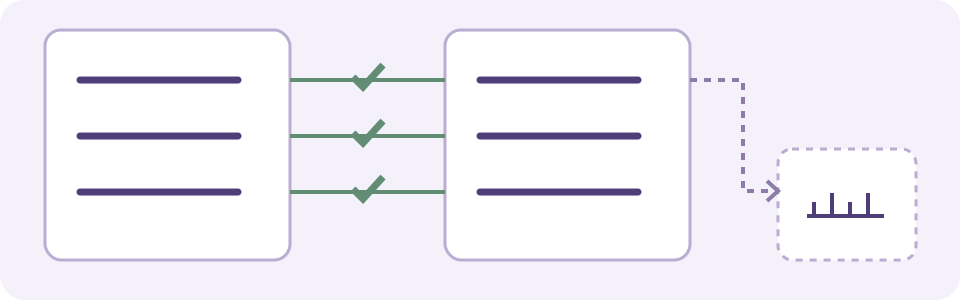
Check the ingredient and its amount as one item
- Two servings stays two servings. Do not quietly double a recipe while translating it.
- 200 g remains attached to tomatoes. A correct number beside the wrong ingredient is still a wrong instruction.
- One half teaspoon stays one half teaspoon. Check both the fraction and the unit; a tablespoon is not the same instruction.
- Diced describes how the tomatoes are prepared. Do not drop the preparation note just because the ingredient name looks right.
- Reserve half is an instruction about the original total, not an additional quantity. Keep it connected to the later step that uses the reserved portion.
Preparation order can change the measured amount. In the English recipe convention illustrated by Bob’s Red Mill, “1/2 cup chopped nuts” means chop before measuring; “1/2 cup nuts, chopped” means measure first, then chop. Preserve that distinction when translating, and check the recipe author’s instructions if the wording is unclear.
See Bob’s Red Mill’s guide to measuring recipe ingredients
If an ingredient has a regional name, keep the original term beside the proposed translation until you have checked what the author means. A familiar supermarket product can be a different ingredient. Do not present a substitution as though the source recipe requested it. For example, the US University of Maryland Extension uses cilantro for harvested leaves and coriander for the mature seeds of the same plant. In an American recipe, check which plant part the author specifies instead of treating those words as interchangeable. This example describes that source’s usage, not a universal rule for every country.
Read the University of Maryland Extension’s cilantro/coriander reference
Follow the method from beginning to end
In the example, “do not add … yet” preserves a negative and a timing condition. A translation that says to add everything immediately loses both. Check each instruction against what has already happened and what remains for a later step, including words such as divided, drained, reserved, until and before. The added final sentence then uses those reserved tomatoes. Follow the same portion from the original total, through the instruction to hold it back, to its eventual use; do not add a second quantity.
- Match every source step with a translated step; watch for merged or missing instructions.
- Preserve heating method, stated temperature and its unit, time, pan size and stated texture or appearance cues. Do not infer a fan-oven setting or a new cooking time.
- Follow references such as the remaining liquid or the reserved mixture back to the correct ingredient and quantity.
- Keep uncertainty visible. If a smudged fraction or unfamiliar instruction cannot be established from the source, resolve it with a reliable source or someone who knows the language and technique before relying on it.
An oven setting or an appearance cue is not a measurement of a food’s internal temperature. For foods covered by its chart, FoodSafety.gov recommends a food thermometer to check the appropriate safe internal temperature; translating a recipe does not perform that check.
Check FoodSafety.gov’s safe minimum internal-temperature guidance
Treat conversion and substitution as separate decisions
Changing a language does not require changing the measurement system. Keep the original numbers and units in the first checked translation. If you later want different units or portions, record that as a separate change and verify it with an appropriate conversion source. A cup can depend on the recipe’s convention, and converting a volume to a weight depends on the ingredient; do not use one universal cups-to-grams number.
King Arthur Baking’s Ingredient Weight Chart is one named reference for ingredient-specific volume and weight equivalents. Start with the recipe author’s stated weights and measuring convention; the chart is an aid for a separate, deliberate conversion, not a reason to change the original translation.
Consult King Arthur Baking’s Ingredient Weight Chart
Likewise, translating an ingredient does not make a replacement equivalent. A deliberate substitution may change the dish. A translated ingredient name does not establish allergen suitability: read the actual packaged ingredient’s ingredient list and allergen information, and resolve remaining questions with the manufacturer. Keep original preparation and storage instructions; fluent wording cannot settle an unresolved safety question.
Read FDA guidance on food labels and allergens
When the recipe is a photo or a handwritten card
For a supported photograph, the separate image tool can provide a translated image and original/translated text blocks. You may review that translation directly against the photograph; a second translation is not automatically needed. If you instead use this text demo, obtain and verify the original-language text first. Do not paste an already translated result as though it were the original source. Check recognized fractions, ingredients and instructions against the actual image: a clear translation of a misread fraction is still wrong. Keep the image and checked text in your own records. This embedded text component does not upload, scan or reconstruct the card.
Use the separate image workflow for a supported photograph
Check the words in a handwritten source before translating
Save a version you can trace back to the source
- Keep the original source and its date or version identifiable.
- Save the checked translation with the same ingredient groups and step order.
- Record an uncertain term, the source wording, your checked correction and why you made it.
- Keep later conversions, serving changes and substitutions separate from language corrections.
- Read the actual saved copy once more. Confirm that fractions, line breaks, quantities and every final step survived copying.
You can return to the full text tool for another permitted passage. Recheck its language selectors and current allowance, and keep your previous work saved outside the tool. For a dish name on a restaurant menu, use the separate menu guide rather than treating it as cooking instructions.
Open the full text translation tool
Translate a restaurant menu rather than a recipe
Frequently asked questions
How do I translate a recipe into English?
Keep the original recipe, choose its actual source language and English as the target, then paste a complete short passage with amounts, units and context. Compare ingredients and every instruction with the source before saving the wording elsewhere. The embedded JotMe component translates pasted text; it does not import a recipe URL or build a saved recipe collection.
Does translating a recipe convert cups to grams?
Do not assume so. Preserve the source quantities and units in your checked translation. If you deliberately convert later, use an appropriate source for the recipe’s measurement convention and the specific ingredient, and record the conversion separately. A universal cups-to-grams value cannot account for different ingredients.
Can I translate a recipe from a photo?
Use the separate supported image workflow to translate the photograph, then review its original/translated blocks against the image. If you choose the text demo instead, first obtain and check the original-language text, especially fractions, ingredients and instructions. Do not treat an already translated result as original input. Keep the photograph and source text outside the tool; this embedded text component does not upload or scan a recipe photo.
What should I do with an unfamiliar ingredient name?
Keep the original name beside the proposed translation and investigate it using the recipe’s region, surrounding instructions and a reliable reference or knowledgeable speaker. Do not silently replace it with a familiar product or invent a missing ingredient. A substitution is a separate choice, not a correction established by fluent translation.
Can I translate a whole recipe at once?
It depends on the passage and your remaining allowance; a complete recipe is not guaranteed to fit. The initial lifetime text balance is 5,000 estimated tokens shared across requests, including source, translation and explanation, and previous use can leave less. The separate API character ceiling is not a quota grant. Keep ingredient groups with their method steps where practical, preserve headings and step numbers, and check the assembled result for cross-references. Splitting, editing or changing languages does not reset the balance. Process only material you are allowed to share.
Can I edit or download the translated recipe in the demo?
There is no dedicated output correction editor, copy-all control or recipe download in this component. Select and copy visible wording if your browser allows, or transfer a checked passage manually to your own document. Inspect and save it before changing input or language or leaving; a limit can clear input and result. Creating an account does not promise to transfer the recipe.
How do I know whether the translated instructions are right?
Compare every ingredient-and-amount pair, serving count, fraction, unit, preparation note and method step with the original. Check negatives, timing conditions and references to reserved portions. A fluent sentence, explanation or back-translation is not independent proof. Resolve uncertain source wording or safety-critical instructions before using them; do not invent a missing temperature, time or ingredient.