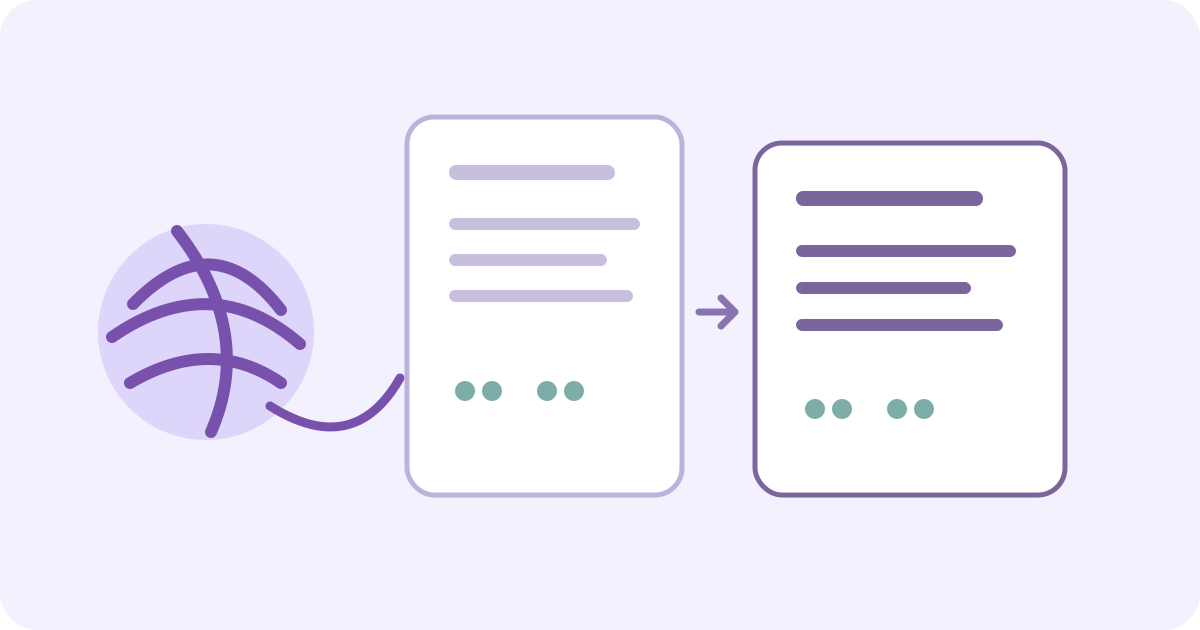
To translate a crochet pattern, identify its language and stitch convention, keep the designer’s abbreviation key, and translate a short permitted passage with its context. Then compare every stitch, repeat and measurement with the original. Translating the prose is different from converting US and UK stitch names, reading a chart or checking whether a project will fit. The text demo below can help you read a passage; it is not a crochet-pattern validator.
- Check whether the designer already offers the pattern in your reading language.
- Keep the original pattern, its version, abbreviation key and stated US or UK convention.
- Prepare a short passage with the notes needed to understand its stitches and repeats.
- Choose the correct source and target languages before pasting into the text demo.
- Compare the result with the original and the pattern key, then save checked notes outside the demo.
Read the Pattern’s Own Key Before Translating
Look for the language, stitch convention, special abbreviations, size key and any corrections supplied by the designer. A pattern can define a special stitch differently from a general glossary. The publisher’s country or a familiar abbreviation is a clue, not a substitute for the pattern’s stated convention. If the key is missing or contradictory, ask the designer or a knowledgeable reader rather than choosing a stitch by guesswork.
The Craft Yarn Council’s abbreviation reference explicitly uses US terminology and lists regional differences. For example, US single crochet (sc) corresponds to UK double crochet (dc), while US double crochet (dc) corresponds to UK treble (tr). An English-to-Spanish translation still needs to know which meaning the source intends. Changing the language does not itself establish that convention.
Read the Craft Yarn Council’s crochet abbreviations and regional terms
Prepare a Passage with Its Instructions Intact
- Keep an unchanged original and identify its title, designer, edition or correction date, page and row or round. Use only material you may send for online processing; include enough permitted context without sending a whole paid pattern or personal details unnecessarily.
- Copy readable text and compare it with the source before translation. Check any text taken from a photo or PDF: a missing asterisk, bracket, comma or digit can change an instruction.
- Keep relevant abbreviation definitions and the complete instruction together, including repeat boundaries, stitch count and the designer’s turning-chain note. An isolated abbreviation may not carry enough context.
- Keep the size order and identify the size you are following. Retain units and labels with hook sizes, yarn quantities, gauge or tension, and finished measurements.
This embedded text component accepts pasted text, not PDF, DOCX, image, webpage-link or chart uploads. You may review a separate image translation beside the original picture. If continuing in the text demo, first obtain and verify the original-language text from your source; do not treat an already translated image result as the original. Check symbols and digits yourself. A chart’s symbols, placement and legend still need their own reading; they are not ordinary prose.
Translate a Short Pattern Passage with the Text Demo
The JotMe text demo below starts with English as the source and Spanish as the target. Use that pair for the fictional example below, or choose another supported pair that matches your passage. Translation starts automatically after you pause typing or pasting; there is no Translate button. Processing uses a network connection, so consider the source’s permissions and sensitive details before pasting.
Read JotMe’s privacy policy before sending a passage
Compare a Fictional English-to-Spanish Example
Author-written example input: “US terms; sc = single crochet; sts = stitches. Work 2 sc in each of the next 3 sts.” The definitions are part of the passage’s context, not a special prompt or a glossary-control feature. This is an original checking exercise, not an excerpt from a designer’s pattern or an observed JotMe result.
Author-written Spanish reference: “Terminología de EE. UU.; sc = punto bajo; sts = puntos. Teje 2 puntos bajos en cada uno de los 3 puntos siguientes.” This reference uses punto bajo for US single crochet; follow the actual pattern’s terminology rather than assuming every Spanish-speaking designer uses identical names. The reference is editorial wording, not captured output from the demo.
Compare DMC’s Spanish stitch terminology
Local tally: three source stitches are used and six single-crochet stitches are made, a net increase of three over those source stitches. Six is not a total for an unspecified row or project. The shortened reading “Work 2 stitches in the next 3 stitches” loses both sc’s stitch identity and each. Preserve the US convention, two per source stitch and next-three boundary together.
You can visually compare codes, digits and repeat marks even without knowing every target-language word. That does not establish that placement, stitch identity or qualifiers have the same meaning. Ask someone who knows both the language and crochet terminology to check uncertain wording. A fluent sentence, plausible count or agreement between two automatic outputs is not independent verification.
The public text allowance starts at 5,000 lifetime tokens, including previous text-tool use. Tokens are estimates, not a promise of 5,000 words or characters. Input, translated output and any explanation contribute to usage. Check the displayed used/remaining counter; the balance can be lower or zero, and a new pattern, language, day or retry does not reset it.
- Save the original passage and any current result in your own file before changing the input.
- Choose the source and target languages first. They must differ; a language selector is not a US-to-UK stitch-conversion setting.
- Paste the prepared passage, including its key context, and wait for the current translation to finish. Editing text or changing a language can start another automatic request.
- Read the translation and any Explanation that is returned. An explanation may be absent and does not independently validate stitch meaning, repeats or arithmetic.
- Use ordinary browser selection to copy useful text into your own notes, keeping the original beside it. This component has no dedicated copy button, pattern editor or PDF/export control.
Try it yourself
0 / 5,000 used · 5,000 left
Translation will appear here
Explanation
An explanation of translation choices appears here when your translation is ready.
Keep a source copy before an error or edit: insufficient allowance can clear the input or result. Save useful output outside the demo before replacing text, starting another passage or leaving. No persistent guest archive or transfer into a signed-in account is promised.
Check Stitches, Repeats and Measurements Separately
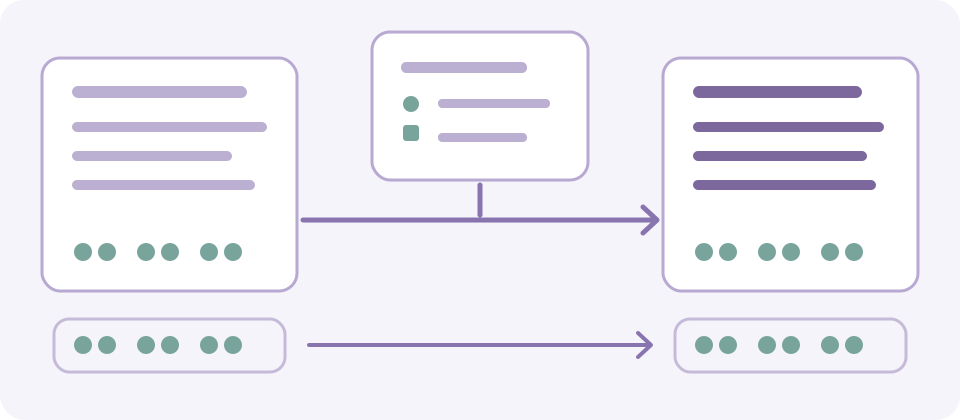
- Stitch meaning: compare abbreviations with the designer’s key and stated US or UK convention. Keep the original code beside your checked explanation; do not replace every dc automatically without knowing its meaning.
- Placement and direction: retain the specified stitch, loop, space, side, row or round. Each, next, last, only and together qualify an action and must not disappear in smoother wording.
- Turning chains: check the designer’s statement about whether the turning chain counts as a stitch and where the first worked stitch goes. Preserve both instructions exactly; do not impose one universal rule.
- Repeat scope: compare every asterisk, bracket and parenthesis with the full instruction. Parentheses can mark a repeat or stitches worked into one stitch or space; they can also appear in size notation. Context and the pattern’s key decide.
- Counts: distinguish source stitches used, stitches made and the stated end count. A plausible total does not prove stitch type or placement. Keep an unexplained mismatch visible instead of silently changing a number.
- Sizes and units: retain the chosen size column, hook measurement, yarn amount and gauge or tension context. There is no dedicated arithmetic-validation, unit-conversion or size-grading control. Label any separate calculation and keep its original value and unit.
Separate a Repeated Group from a Size Choice
A second original checking exercise is: “US terms; sc = single crochet; st = stitch. [1 sc in next st, 2 sc in next st] × 3 in total.” Only the bracketed two-step group repeats. Three in total means the first group plus two more, not the first group plus three more. Keep the brackets, order and total-repeat wording together.
Each group uses two source stitches and makes three single-crochet stitches. Three complete groups therefore use six source stitches and make nine, a local net increase of three. These figures describe only this fictional group, not a complete row or a real project. They are manually checked editorial arithmetic, not a claim that JotMe calculates or validates the pattern.
For a separate fictional size example, read “Sizes S (M, L); counts 8 (10, 12) sts.” If you select M, its corresponding value is 10; keep following that size consistently wherever the actual pattern uses the same order. The parentheses here separate size choices, not a command to repeat them. This example does not establish fit or a rule for every designer’s notation.
Read the Craft Yarn Council’s pattern-reading guide
Resolve an Unclear Line at Its Source
First distinguish a copying error from a language question or a pattern error. If the original shows an unclear digit or symbol, find a legible authorized source before translating again. If the text is clear but an abbreviation is unfamiliar, consult that pattern’s key or ask the designer. If the wording is understood but the count still disagrees, preserve the mismatch and seek clarification rather than rewriting the pattern to force a total.
Where practical, compare a small practice section with the designer’s instructions and gauge guidance before committing time and yarn. A useful sample does not guarantee every size will fit. JotMe does not work the stitches, inspect the fabric or certify the instructions. Keep unresolved language or count questions visible and seek knowledgeable clarification.
Read the separate screenshot-translation workflow
Save Checked Notes Without Replacing the Designer’s Pattern
- Keep the original source, key and version, the exact passage, language pair and checked reading. Label automatic wording and unresolved interpretations.
- Maintain a small external term record: source abbreviation, the designer’s definition and your checked target wording. Carry relevant source context into each later passage within the remaining allowance; the demo is not a project glossary or pattern archive.
- Record where corrections came from, such as the designer’s update. Keep previous readings traceable. Retain row or round references, the selected size and original units; label your own conversions or explanations as additions.
- Compare the assembled notes for consistent terminology, row or round references and size selection. Save before changing input or languages, retrying or leaving. There is no row counter, stitch-glossary editor, chart converter or saved pattern project in this component.
Reading or buying a pattern does not by itself grant permission to republish its text, diagrams or a translated edition. Follow the designer’s permissions and the intended use. For a translation you plan to share, resolve material uncertainty and obtain the appropriate authorization and knowledgeable review; a readable automatic result is not approval from the designer.
Open the full text translation page
Frequently Asked Questions
How Do I Translate a Crochet Pattern into Another Language?
Check for a designer-provided translation first. Keep the original, its abbreviation key, stated stitch convention and selected size, then translate a short permitted text passage with the context it needs. Compare stitches, repeat boundaries, counts and units separately. The embedded JotMe text demo starts English to Spanish; choose a supported pair that matches your passage and use only the remaining lifetime allowance.
Does Translating English Convert US Crochet Terms to UK Terms?
No automatic equivalence is promised. US and UK stitch names can use the same abbreviation for different stitches: US double crochet corresponds to UK treble, while UK double crochet corresponds to US single crochet. Identify the pattern’s own convention and key before interpreting a line. Changing a source or target language is not a dedicated stitch-conversion setting.
Can I Upload a PDF, Photo or Symbol Chart Here?
This embedded text component accepts pasted text, not file or URL imports. You can review a separate image translation against the original picture, within that image tool’s own allowance and limits. To continue in the text demo, obtain and verify original-language text rather than using a translated rendering as the source. Check extracted symbols and digits. A chart’s symbols, placement and legend need their own reading; this tool does not turn a picture into a verified pattern.
Is the Whole Pattern Free to Translate?
The public text allowance starts at 5,000 lifetime tokens including prior use, not 5,000 words or characters and not a fresh allowance per pattern or day. Input, output and any explanation contribute to usage. The remaining balance may already be lower or zero. Check the counter, prepare a short passage first, and keep a source copy because quota errors can clear text. Editing, changing languages or retrying may use more of the same allowance.
Will It Preserve Stitch Counts, Sizes and Repeats?
Do not assume it will. Compare every abbreviation, repeat mark, each/next/only condition, selected size and number with the original key. Keep source stitches used, stitches made and final counts distinct. Check whether the designer counts the turning chain and where the first worked stitch goes. Parentheses can indicate different things, including size choices. There is no dedicated arithmetic-validation, unit-conversion or size-grading control; label separate calculations and retain original values.
Can I Edit, Copy or Export the Pattern in the Demo?
You can edit the source text, which may start another automatic translation after a pause. Use ordinary browser selection to save the displayed translation and any explanation into your own notes. This component has no dedicated copy button, PDF export, stitch editor, row counter or saved pattern project. Save outside it before replacing text or leaving; no persistent guest archive or account transfer is promised.
What If the Translated Instructions Still Do Not Make Sense?
Check the copied source, pattern key, regional convention, repeat boundaries and selected size before trying again. Keep an unresolved count or symbol visible and ask the designer or a knowledgeable reader rather than guessing or forcing the numbers to agree. Two matching automatic outputs do not verify the pattern. Resolve material uncertainty and check the designer’s permissions before relying on or sharing a translated edition.